PRP

PRP

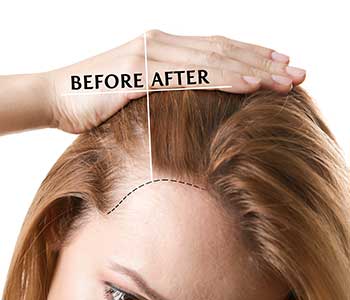
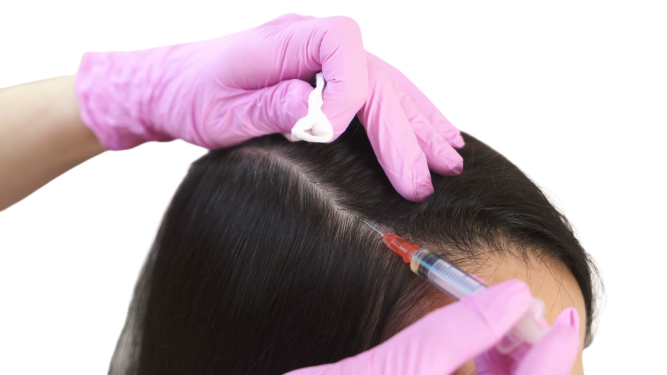
PRP (platelet-rich plasma) therapy for hair loss is a three-step medical treatment in which a person’s blood is drawn, processed, and then injected into the scalp.

Some in the medical community think that PRP injections trigger natural hair growth and maintain it by increasing blood supply to the hair follicle and increasing the thickness of the hair shaft. Sometimes this approach is combined with other hair loss procedures or medications.
PRP for hair loss side effects

Because PRP therapy involves injecting your own blood into your scalp, you aren’t at risk for getting a communicable disease.

Still, any therapy that involves injections always carries a risk of side effects such as:

  • injury to blood vessels or nerves
  • infection
  • calcification at the injection points
  • scar tissue

There’s also the chance that you could have a negative reaction to the anesthetic used in the therapy. If you decide to pursue PRP therapy for hair loss, let your doctor know in advance about your tolerance to anesthetics.
Mesotherapy

Mesotherapy

Mesotherapy is a non-surgical cosmetic medicine treatment. Mesotherapy employs multiple injections of pharmaceutical and homeopathic medications, plant extracts, vitamins, and other ingredients into subcutaneous fat. Depending on the indications, it can be used for hair loss prevention and hair re-growth

Benefits of Mesotherapy for Scalp

  • Tremendous improvement in the quality of existing hair
  • Reduction in Hair fall
  • Hair growth

Mesotherapy for Scalp is used to Treat

  • Non-androgenic alopecia and repair hair which has been prematurely damaged by environmental agents (sun, pollution, etc)
  • Hair thinning
  • Treat hair loss for women
  • To eliminate dandruff and seborrhea
  • To treat thin and/or devitalized hair

Hair Transplant

Hair Transplant

Hair transplantation is a surgical technique that removes hair follicles from one part of the body, called the ‘donor site’, to a bald or balding part of the body known as the ‘recipient site’. The technique is primarily used to treat male pattern baldness

You usually have the procedure in the doctor’s office. First, the surgeon cleans your scalp and injects medicine to numb the back of your head. Your doctor will choose one of two methods for the transplant: follicular unit strip surgery (FUSS) or follicular unit extraction (FUE).

Expectations and Recovery

After the surgery, your scalp may be very tender. You may need to take pain medications for several days. Your surgeon will have you wear bandages over your scalp for at least a day or two. He may also prescribe an antibiotic or an anti-inflammatory drug for you to take for several days. Most people are able to return to work 2 to 5 days after the operation.

Within 2 to 3 weeks after surgery, the transplanted hair will fall out, but you should start to notice new growth within a few months. Most people will see 60% of new hair growth after 6 to 9 months. Some surgeons prescribe the hair-growing drug minoxidil (Rogaine) to improve hair growth after transplantation, but it’s not clear how well it works.

Are there different types of hair transplants?

There are two types of transplant procedures: slit grafts and micrografts.

Slit grafts contain 4 to 10 hairs per graft. Micrografts contain 1 to 2 hairs per graft, depending on the amount of coverage needed.

Who might benefit from a hair transplant?

Receiving a hair transplant can improve your appearance and self-confidence. Good candidates for a hair transplant include:

  • men with male pattern baldness
  • women with thinning hair
  • anyone who has lost some hair from a burn or scalp injury

Hair replacement isn’t a good option for:

  • women with a widespread pattern of hair loss throughout the scalp
  • people who don’t have enough “donor” hair sites from which to remove hair for transplant
  • people who form keloid scars (thick, fibrous scars) after injury or surgery
  • people whose hair loss is due to medication such as chemotherapy

Breast Assymetry correction

Breast Assymetry correction

Breast asymmetry is a common concern among women. While this condition can be quite severe, it is important to note that it is extremely common. The vast majority of cases are mild. One study found at least 65% of women have some mild asymmetry in their breasts. Other, similar studies have put that number at closer to 88% of adult women.

Breast asymmetry is defined as a difference in one or more of the following:

  • form
  • position
  • volume of the breast

Some breast asymmetry is normal and can fluctuate throughout life. For example, asymmetry is usually more noticeable during puberty, pregnancy, and during breast feeding. Doctors are not completely sure what causes breast asymmetry, but possible contributors include hormonal changes or imbalances, traumatic injuries, an underlying medical or skeletal condition, and in rare cases breast cancer.

Small differences in the size and shape of your breasts are nothing to be concerned about. However, if the differences are greater than one bra cup size it may cause psychological distress. If you are seeking to correct any breast asymmetry, there are three options: augmentation, reduction, and/or a lift.

Breast asymmetry can be corrected through a few different breast augmentation techniques. If you are looking to increase the overall size of your breasts, or would like to match the size, and shape to a certain extent, of your larger breast, then a standard breast augmentation might be something to consider. As with any breast augmentation surgery, you will have your choice of silicone or saline implants. Whatever your choice, different sizes are used in each breast to correct the asymmetry and obtain a natural look. You may also choose a round or teardrop (anatomical) breast implant, which can help improve shape asymmetry as well, to a certain extent. You can see breast augmentation photos Toronto in our online gallery.

Nipple Correction

Nipple Correction

Inverted nipples occur when the tissue of the nipple is retracted into the tissue of the breast, instead of pointing outward. Often, this occurs spontaneously and can be reversed simply by manually stimulating the nipples, though in rare occasions, the nipple will remain inverted indefinitely

Problems Caused by Inverted Nipples

Even if a woman is born with inverted nipples, it can be very disconcerting to have this condition. As any gynecologist will tell you, this is a matter of simple genetics, and will generally not cause any problems. However, if inversion is a result of some other change after birth, there may be some more serious problems. An inverted nipple may block a mammary duct, which can mean that when the time comes to feed a newborn baby, a woman with an inverted nipple may not be able breastfeed.

An inverted nipple can also cause a woman to look and feel older than she is. This is a common problem for aging women, but even if you are not a mature woman, an inverted nipple can give the entire breast an aged appearance.

Inverted Nipple Treatment

Some nipple inversions can be solved with a simple suction device, which will bring the nipple tissue back to its intended position. These generally work best when the nipple is only inverted a little and when the inversion was due to contraction of a muscle or milk duct.

In some situations, however, more drastic measures will have to be taken. Surgery to correct an inverted nipple is a fairly short and easy surgery, depending on the original cause of the inversion. In most situations, there is a simple stretching of a muscle or the severance of a duct that holds the nipple inside the breast. This is the best treatment for nipples that are severely inverted, but it will mean that the woman may not be able to breastfeed after the surgery.

Male Breast Surgery

Male Breast Surgery

A male breast reduction is the most effective known treatment for gynecomastia, or enlarged male breasts. This cosmetic surgery procedure removes excess fat and glandular tissue to restore a flatter, firmer and more masculine contour to the chest.

Why have a male breast reduction?

While losing weight can help reduce the appearance of male breasts for some men, often times there is excess glandular tissue as well, causing even very lean patients to notice enlarged breasts. Currently, male breast reduction is the only consistently effective treatment for gynecomastia that has long lasting, if not permanent, results. Following this surgery, patients commonly say they feel comfortable going shirtless for the first time in years, and report an enhanced sense of self-confidence.

If you are uncomfortable or self-conscious about the appearance of your chest, or if you find yourself avoiding certain activities because you are afraid to show your chest, male breast reduction is an option to consider. With the help of a qualified cosmetic surgeon, the procedure offers dramatic, near immediate improvements with minimal scarring.

Breast Lift Surgery

Breast Lift Surgery

A breast lift — also known as mastopexy — is a surgical procedure to change the shape of your breasts. During a breast lift, excess skin is removed and breast tissue is reshaped to restore firmness and raise the breasts to a higher position.You might choose to have a breast lift if your breasts sag or your nipples point downward. A breast lift might also boost your self-image and self-confidence.A breast lift won’t significantly change the size of your breasts. However, a breast lift can be done in combination with breast augmentation or breast reduction.

A breast lift can reduce sagging and raise the position of the nipples and the darker area surrounding the nipples (areolae). The size of the areolae can also be reduced during the procedure to keep them in proportion to the newly shaped breasts.

You might consider a breast lift if:

  • Your breasts sag — they’ve lost shape and volume, or they’ve gotten flatter and longer
  • Your nipples — when your breasts are unsupported — fall below your breast creases
  • Your nipples and areolae point downward
  • Your areolae have stretched out of proportion to your breasts
  • One of your breasts falls lower than the other

What you can expect

After a breast lift, your breasts will likely be covered with gauze and a surgical support bra. Small tubes might be placed at the incision sites in your breasts to drain any excess blood or fluid.

Your breasts will be swollen and bruised for about two weeks. You’ll likely feel pain and soreness around the incisions, which will be red or pink for a few months. Numbness in your nipples, areolae and breast skin might last for about six weeks.

In the first few days after a breast lift, take pain medication as recommended by your doctor. Avoid straining, bending and lifting. Sleep on your back or your side to keep pressure off your breasts.

Avoid sexual activity for at least one to two weeks after the breast lift. Ask your doctor when it’s OK to resume daily activities, such as washing your hair, showering or bathing.

While you’re healing, keep your breasts out of the sun. Afterward, be careful to protect your incisions during sun exposure.

Breast Reduction

Breast Reduction

Breast reduction surgery, also known as reduction mammaplasty, is a procedure used to remove excess fat, tissue and skin from the breasts. If you have large breasts, you might choose to have breast reduction surgery to ease discomfort or to achieve a breast size proportionate to your body.

Breast reduction surgery might also help improve your self-image and self-confidence and your ability to participate in physical activities.

Breast reduction surgery is meant for women who have large breasts and want to resolve issues such as:

  • Chronic back, neck and shoulder pain
  • Chronic rash or skin irritation under the breasts
  • Deep grooves in the shoulders from bra strap pressure
  • Restricted activity
  • Poor self-image related to large breasts
  • Difficulty fitting into bras and clothing
  • Difficulty sleeping

Also, breast-feeding might be challenging after breast reduction surgery — although some research suggests that breast-feeding difficulty after breast reduction surgery is related to a lack of support or coaching rather than the surgery itself.

What you can expect

Your breasts will be covered with a gauze dressing or bandages. A tube might be placed under each arm to drain any excess blood or fluid. Your surgeon will likely prescribe medication for pain as well as antibiotics to decrease your risk of infection.

Your breasts will be covered with a gauze dressing or bandages. A tube might be placed under each arm to drain any excess blood or fluid. Your surgeon will likely prescribe medication for pain as well as antibiotics to decrease your risk of infection.

You’ll need to limit physical activity for two to four weeks while the breasts heal. Your surgeon also may recommend avoiding underwire bras for a month after surgery.

Scarring usually fades over time. You will need a follow-up visit with your surgeon to remove stitches and check your recovery.

Successful breast reduction surgery can relieve pain in your upper back, neck and shoulders. It might also increase your ability to participate in physical activities and promote a more positive self-image.

Although you’ll see results immediately, remember that it can take months for the swelling to completely go down and the surgical scars to fade. The final result is generally permanent — although breast shape and size can change due to factors such as aging and weight gain or loss.

Breast Augmentation (implant)

Breast Augmentation (implant)

Breast augmentation, also known as augmentation mammoplasty, is a popular cosmetic surgery procedure designed to enhance the size, shape, or fullness of the breast. This comprehensive guide will delve into the various aspects of breast augmentation, including the types of breast implants available, the reasons for choosing this procedure, and what potential patients can expect before, during, and after surgery.

Understanding Breast Augmentation

What is Breast Augmentation?

Breast augmentation involves the surgical insertion of breast implants to increase the fullness and projection of the breasts or to improve symmetry of the breasts. Typically, the implants are placed either under the pectoral muscle or directly behind the breast tissue.

Benefits of Breast Augmentation:

Individuals may opt for breast augmentation for various reasons:
1. Enhancing Appearance: For those who wish to enlarge naturally small breasts.
Restoration After Life Changes: To restore breast volume that may have been lost due to pregnancy, weight loss, or breastfeeding.
2. Symmetry Correction: To correct asymmetrical breasts for a balanced appearance.
3. Reconstruction: To reconstruct the breast(s) after mastectomy or injury.

Types of Breast Implants:

Breast implants are categorized into three main types, each offering unique benefits:

1. Saline Implants: These implants are filled with sterile salt water. They are inserted empty and filled once in place, allowing for a minor adjustment in size.
2. Silicone Gel-Filled Implants: These consist of a silicone outer shell filled with a viscous silicone gel, which feels more like natural breast tissue compared to saline implants.
3. Alternative Composite Implants: These may be filled with other materials, such as polypropylene string or soy oil, though they are less common than saline and silicone implants.

Preparing for Breast Augmentation:

Consultation and Decision Making.
Choosing to undergo breast augmentation is a significant decision and requires thorough consideration and consultation with a qualified plastic surgeon. During consultations, surgeons typically discuss:
1. Implant Type: The differences between saline and silicone implants, including the risks and benefits of each.
2. Size Selection: Using “sizers” in a bra to visualize potential outcomes and help in deciding the implant size.
3. Surgical Approach: The incision options and the placement of the implants.

The Surgical Procedure:

What to Expect During Surgery
Breast augmentation is typically performed under general anesthesia. The procedure involves making an incision, inserting the implant, and closing the incision. The location of the incision can be in the crease under the breast, around the areola, or in the armpit.

Recovery and Aftercare:

Post-surgery, patients can expect some swelling, bruising, and discomfort. Specific aftercare instructions may include wearing a support bra, taking prescribed medications, and scheduling follow-up visits to ensure proper healing and monitoring implant condition.

Longevity and Safety of Breast Implants:

Breast implants do not last a lifetime. The average lifespan of an implant is usually between 7 to 12 years, but this can vary depending on the type of implant, the surgical technique, and individual factors. Regular check-ups and MRI scans are recommended to assess the condition of silicone implants.

Conclusion:

Breast augmentation offers a solution for individuals looking to enhance or restore breast size and shape. It’s crucial for potential patients to fully understand the procedure, the types of implants, and the care required post-surgery. As with any surgical procedure, it’s vital to choose a qualified and experienced surgeon to ensure the best outcomes.

By providing clear, comprehensive, and accessible information about breast augmentation, this guide aims to help individuals make informed decisions about enhancing their appearance and achieving their aesthetic goals.

Mole Removal

Moles

Moles are growths on the skin that are usually brown or black. Moles can appear anywhere on the skin alone or in groups. It is normal to have many moles on various parts of body. As the year pass, moles usually change slowly, becoming raised and or changing colour. Often hair develop on the mole. Some moles may not change at all, while others may slowly disappear over time.

Treatment

Removed with lasers so as to leave no scars.

Skin tags

A skin tag is a small tissue that hangs of the skin by a connecting stalk. They are usually found on the neck, chest, back, armpits, under the breast or in the groin area. Skin tags appear most often in women, especially with weight gain and in elderly people. They usually don’t cause any pain.

Treatment

Removed with lasers so as to leave no scars.