Laser tattoo removal

Laser birthmark removal

Any mark, spot, or bump that is present in or around the time of birth on the skin of an infant is a birthmark. Mothers are fond of giving these rather romantic names such as angel’s kisses, stork bites, or beauty marks. Most of these lesions are not particularly esthetically desirable.
Laser tattoo removal

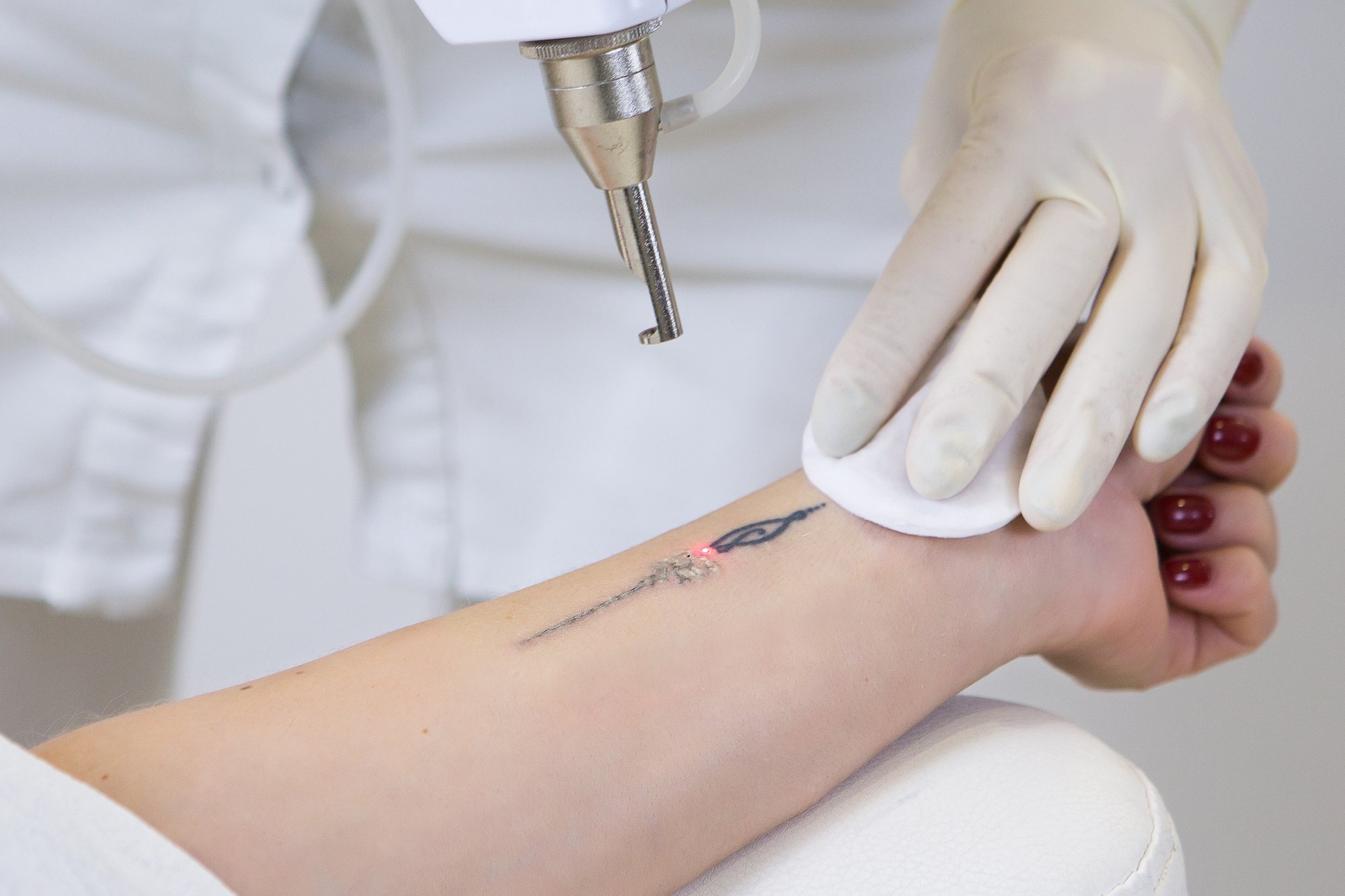
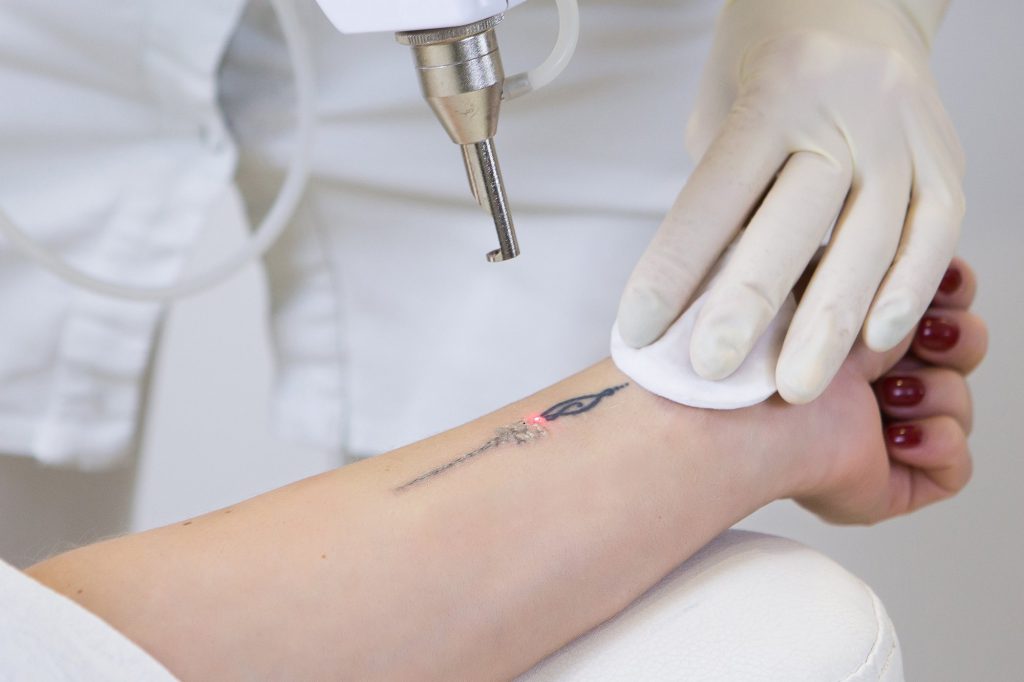
Lasers are the most common method of tattoo removal performed today. Tattoos consist of thousands of particles of tattoo ink suspended in the skin. The normal human immune system typically removes small foreign particles from the skin. Tattoo ink particles are too big to be removed by this system and are thus considered permanent. The use of lasers helps to break up these particles into smaller pieces that can be removed by the immune system.

Laser treatments work by targeting the ink particles in the skin with highly concentrated light waves that heat up the ink particles and cause them to fragment into smaller particles that are able to be cleared away by the body’s immune system.

How it works

Lasers remove tattoos by breaking up the pigment colors with a high-intensity light beam. Black tattoo pigment absorbs all laser wavelengths, making it the easiest color to treat. Other colors can only be treated by selected lasers based upon the pigment color.

You should first schedule a consultation with a trained professional who can evaluate your tattoo and advise you on the process. The number of treatments you will need will depend on the age, size, and color(s) of your tattoo. The color of your skin, as well as how deep the tattoo pigment goes, will also affect the removal technique.
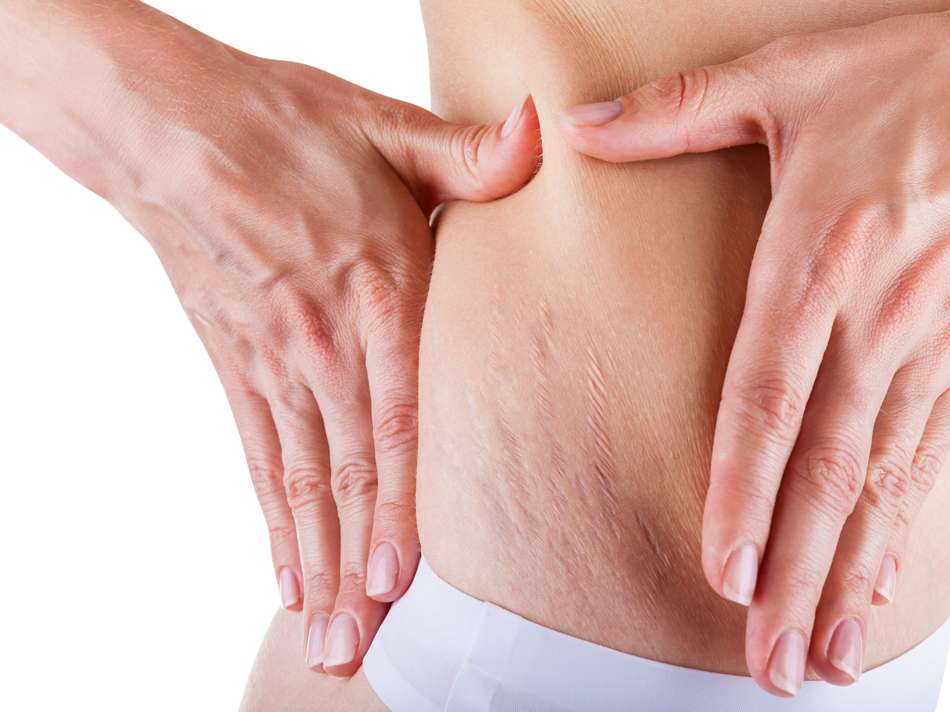
Stretch mark removal

Stretch mark removal

Stretch marks are lines or bands caused by stretching of the skin’s connective tissue.Stretch marks are not physically painful, but they can affect a person’s confidence and self-esteem. They can be disfiguring in severe cases.

Stretch marks, or striae, are a form of skin scarring associated with pregnancy, obesity, puberty, and short-term weight gain from bodybuilding and other physical activities. They form when the dermis – the middle layer of the skin that maintains shape and elasticity – is stretched more than it can tolerate. Connective fibers in the skin eventually break, disrupting collagen production and causing scarring. This scarring may be treatable only through stretch mark removal.

When the middle layer of skin stretches too quickly, some of its collagen fibers can break.

This allows underlying blood vessels to show through, leaving behind the telltale red or purplish marks.Over time, they fade to a white or silver color as blood vessels heal. Once they appear, the marks do not usually go away fully.

Candidates

While there are many suitable candidates for stretch mark removal, the most common patients are women who have recently given birth. Stretch marks and pregnancy usually go hand in hand – almost three in four women will experience stretch marks after pregnancy. These women usually suffer from belly stretch marks, but other areas may also be affected, resulting in the need for mommy makeover surgery. Other candidates include people who have lost significant weight and bodybuilders who have quickly developed significant muscle mass.

Causes of Stretch Marks

  • Genetics: Women are more likely to get belly stretch marks if their mother, for instance, had stretch marks after pregnancy. Significant weight gain and loss: Your skin stretches as your weight fluctuates, sometimes resulting in stretch marks.
  • Puberty: Growth spurts during puberty often result in stretch marks as the skin is unable to keep up with the body’s rate of growth.
  • Bodybuilding: Rapid development of muscle mass may stretch the skin beyond its limits.
  • Corticosteroids: Heavy or long-term use of oral or topical corticosteroids, a widely used pharmaceutical steroid compound, can lead to stretch mark formation.
  • Ethnicity: People with darker skin are less likely to have stretch marks.

Laser Hair Removal

Laser Hair Removal

Laser hair removal is a medical procedure that uses a concentrated beam of light (laser) to remove unwanted hair.

During laser hair removal, a laser emits a light that is absorbed by the pigment (melanin) in the hair. The light energy is converted to heat, which damages the tube-shaped sacs within the skin (hair follicles) that produce hairs. This damage inhibits or delays future hair growth.

Why it’s done

Laser hair removal is used to reduce unwanted hair. Common treatment locations include legs, armpits, upper lip, chin and the bikini line. However, it’s possible to treat unwanted hair in nearly any area, except the eyelid or surrounding area.

Hair color and skin type influence the success of laser hair removal. The basic principle is that the pigment of the hair, but not the pigment of the skin, should absorb the light. The laser should damage only the hair follicle while avoiding damage to the skin. Therefore, a contrast between hair and skin color — dark hair and light skin — results in the best outcomes.

What you can expect

Laser hair removal usually requires a series of two to six treatments. The interval between treatments will vary depending on the location. On areas where hair grows quickly, such as the upper lip, the treatment might be repeated in four to eight weeks. On areas of slow hair growth, such as the back, the treatment might be every 12 to 16 weeks.

For each treatment you’ll wear special goggles to protect your eyes from the laser beam. An assistant might shave the site again if necessary. The doctor might apply a topical anesthetic to your skin to reduce any discomfort during treatment.

Multiple lipoma removal

Multiple lipoma removal

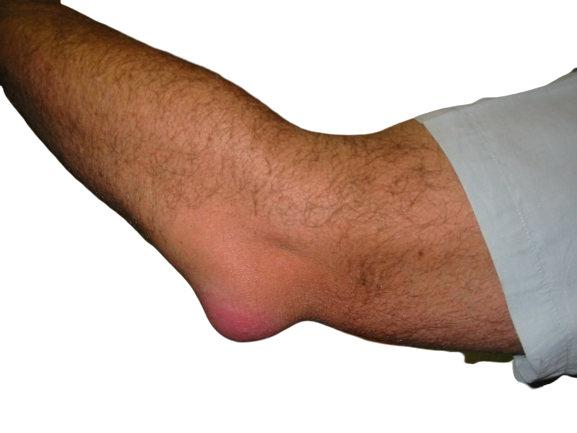
A lipoma is a slow-growing, fatty lump of harmless mass that is not cancer and most often situated between your skin and the underlying muscle layer. Usually, detected in middle age, lipomas can feel doughy and usually isn’t tender, moves easily with slight finger pressure. Some people have more than one lipoma.

Symptoms

    Lipomas can occur anywhere in the body such as:

  • Under the skin – especially in the neck, shoulders, back, abdomen, arms and thighs.
  • Soft and doughy to the touch – moves easily with slight finger pressure.
  • Generally small – typically less than 2 inches (5 centimeters) in diameter, but they can grow.
  • Sometimes painful – Lipomas can be painful when they grow and press on nearby nerves or if they contain many blood vessels.

Lipomas usually do not require treatment. However, the doctor will recommend removal of the lipoma only if the lipoma is painful or is growing. Lipoma treatments include:

  • Surgical removal – Most lipomas are removed surgically by cutting them out. Relapse after removal is uncommon. Possible side effects are scarring and bruising.
  • Steroid injections – This treatment shrinks the lipoma but usually doesn’t eliminate it. The use and potential of injections before surgical removal is still being studied.
  • Liposuction – In this treatment, a needle and a large syringe are used to remove the fatty lump.

Cool sculpting

Cool sculpting

CoolSculpting, or cryolipolysis, is a nonsurgical body contouring procedure. A plastic surgeon uses a device to freeze fat cells under the skin. Once the fat cells have been destroyed, they are gradually broken down and removed from the body by the liver.

Common immediate side effects of CoolSculpting include:

  • redness
  • firmness
  • pinching sensation
  • minor swelling
  • tenderness
  • bruising
  • stinging
  • muscle cramping

A person may continue to experience these side effects for a few weeks after the procedure. Other common side effects that a person may experience in the first few weeks after CoolSculpting include:

  • itchiness, especially a few days after the procedure
  • diarrhea, as dead fat cells are removed from the body
  • a feeling of fullness in the throat after treatments involving the neck or chin region

CoolSculpting is also only approved and proven effective on a limited number of body areas.Body regions where CoolSculpting is considered safe and effective for removing minor fat deposits include:

  • abdomen
  • thighs
  • under the chin or upper neck
  • flanks
  • under the armpit
  • back
  • buttocks and under the buttocks

Ultrasound lipolysis

Ultrasound lipolysis

Laser lipolysis is a type of cosmetic surgery. It uses laser energy to change the shape and appearance of your body. There are other kinds of lipolysis that involve injections or radio wave treatments, but laser lipolysis is the most common technique.

Benefits

  • There’s little risk of infection to the treated area.
  • The risk of scarring is minimal.
  • The recovery period is shorter than with some other procedures. You can usually resume your normal activities about a week afterward.

Lipolysis uses lasers to break fat cells apart, reducing the volume of fatty tissue. This process is also said to tighten the skin in the area where the treatment is applied. You may find that your skin is smoother and tighter than before.

What to expect during the procedure

    This procedure usually takes less than an hour, and you’ll be awake the entire time.

  • You’re prepped in a sterile environment, most likely in your doctor’s office, and given sterile scrubs or a gown to wear.
  • A local anesthetic is then injected into the area where you’re having lipolysis.
  • Your doctor makes a very small (sometimes only a millimeter!) incision at the area where you have unwanted fat deposits.
  • Your doctor inserts the laser underneath the top layer of your skin through the incision. They’ll move it back and forth under your skin from different angles. During this time, you may feel some heat or even a cold sensation. Because of the anesthesia, you shouldn’t much discomfort.
  • The fat deposits that are broken up by the laser are either massaged out of the area or vacuumed out, depending on how much “melted” fat there is to remove.

Abdominal lipectomy

Abdominal lipectomy

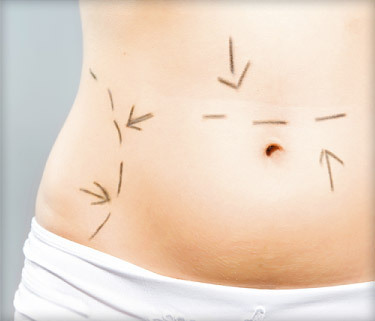
Belt lipectomy is a type of surgery. It’s done to remove the loose skin and fat around your waist or “belt line.” This is also called an abdominal lipectomy, tummy tuck, and panniculectomy. You may have this surgery after you lose a great deal of weight. This is often done after weight-loss surgery

What happens during a belt lipectomy?

  • An anesthesiologist will give you general anesthesia. This is done so you will sleep through the procedure and won’t feel anything. In rare cases, you will get spinal anesthesia and a medicine to relax you. You will be awake is this case.
  • The anesthesiologist will carefully watch your heart rate, blood pressure, and other vital signs.
  • You will get antibiotics during and after the surgery. This is to help prevent infection.
  • The surgeon will make a cut where your buttocks and lower back come together. This is done to remove extra skin and tissue.
  • The surgeon continues the cut on your front lower belly. He or she also removes the extra skin and tissue from there. You may need to be repositioned on the operating table.

What happens after a belt lipectomy?

  • When you wake up, you may have a tube underneath your skin. This will drain fluid that builds up in your wound. You may have some pain afterward. You can take pain medicines. You should be able to eat a normal diet once you are ready.
  • You may need to stay overnight in the hospital after your surgery. Some people may be able to go home the same day as surgery. But this isn’t common.
  • Your surgeon will tell you how to care for your wounds. Tell your surgeon if you have severe draining, redness, or a fever. If you have life-threatening symptoms, call 911. These include sudden shortness of breath, a lot of bleeding, or chest pain.
  • Your surgeon will also tell you how to limit your movements after surgery. You shouldn’t expose your wounds to too much force as they heal. Follow all of your surgeon’s orders carefully. This will improve your chances of a smooth recovery.
  • You will see the results of your surgery right away. They will last if you keep a stable weight. If you are not happy with the results of your surgery, talk with your surgeon. Some people need another surgery for best results.

Laser Therapy

Laser Therapy

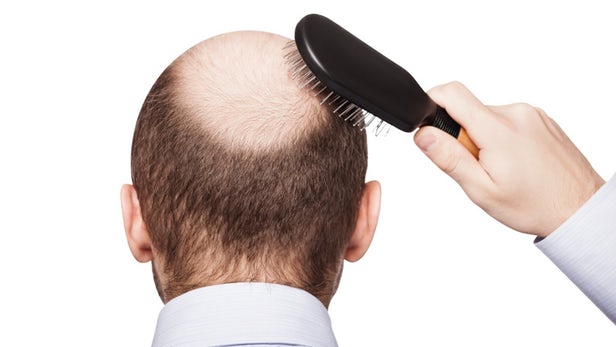
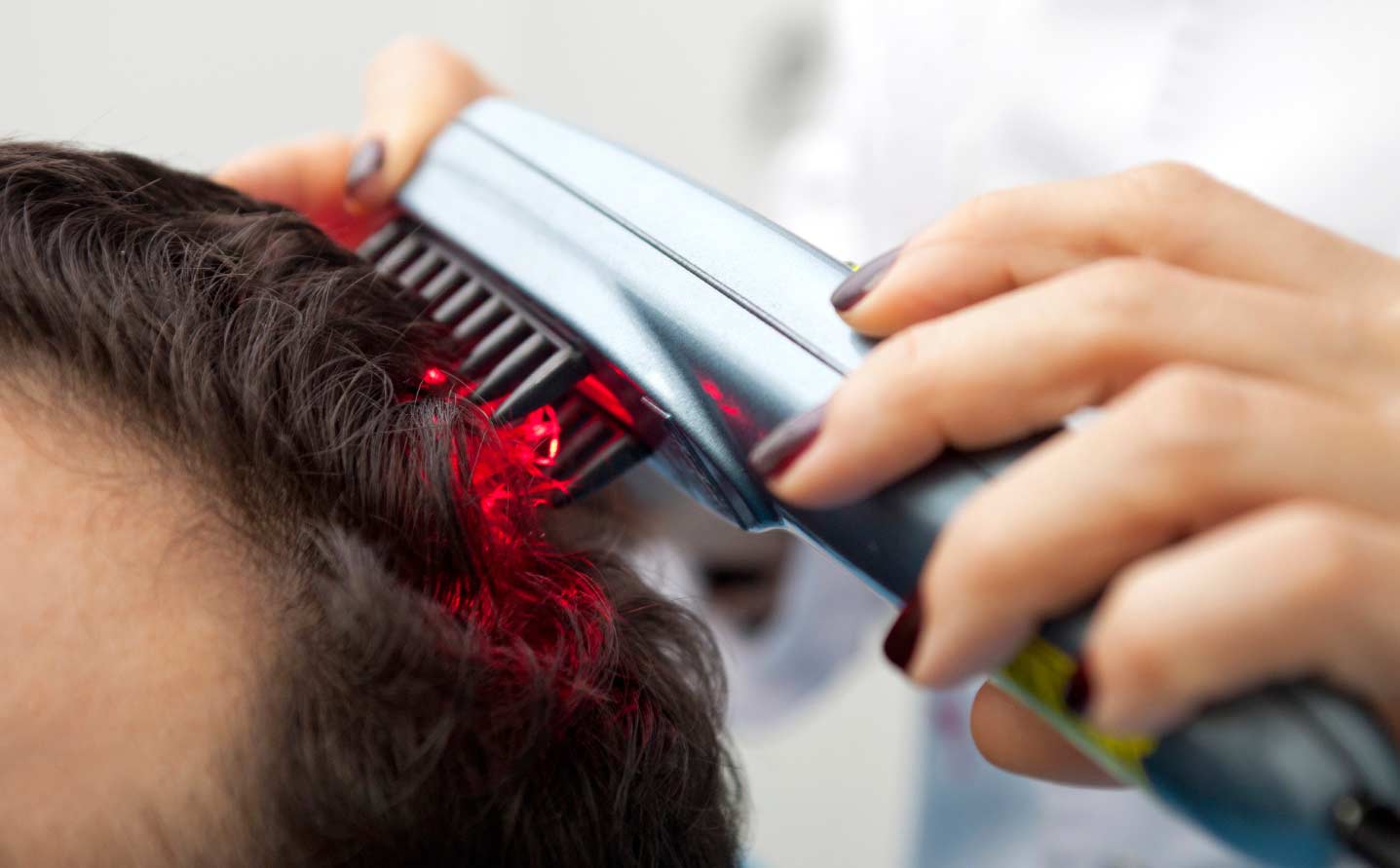
Low level laser hair therapy is a clinically proven, safe, non-invasive breakthrough that is revolutionary for men and women suffering the devastating effects of hair loss. With low level laser hair therapy, you can achieve thicker, fuller, shinier, and healthier looking hair. Our lasers are “soft” or “cold” lasers approved safe for cosmetic purposes and fully comply with federal standards for laser safety set by the US Food and Drug Administration (FDA).

Laser Hair Therapy is safe, easy and painless (you quite literally won’t feel a thing), and there are no known side effects associated with low level laser light hair therapy. Developed in Europe for improving hair shaft quality and volume while prolonging the life of hair color and improving hair colors and perms, it is especially effective when combined in a multi-therapeutic hair loss control and prevention program.

Benefits of Laser Hair Rejuvenation Therapy

  • Increases the blood supply to the scalp by 54% after only one treatment.
  • Stimulates hair follicles.
  • Stops the progression of hair loss in 85% of patients.
  • Increased hair strength and elasticity.
  • Fuller, shinier, softer, thicker hair.
  • Promotes ticker, stronger, and healthier looking hair

Who is the Best Candidate for Laser Hair Therapy?

Anyone experiencing hair loss. Best results, however, are experienced by men and women in the earliest stages of hair loss — typically those individuals presenting with hair loss equivalent to Norwood 1-3.